

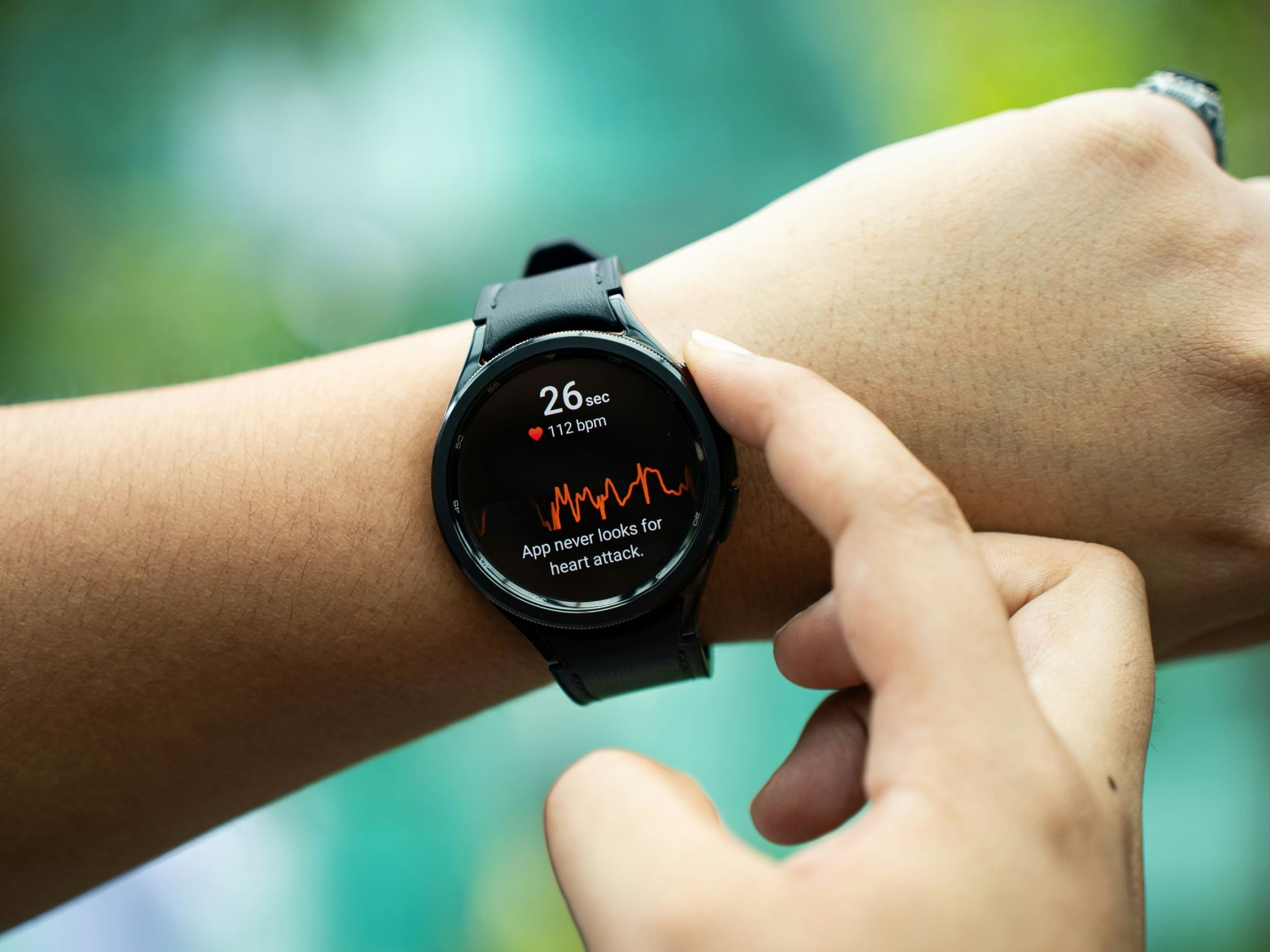

Samsung Research America’s Digital Health Team has presented two AI foundation models designed to learn from wearable biosignals. The work centres on data captured by smartwatches, including heart activity, sleep, and physical activity.
The company discussed its Connected Care vision at the Health Forum during Galaxy Unpacked in July 2026. Samsung described a future of preventive, personalised, and connected care, supported by health technology and healthcare partnerships. Its research team positions health foundation models as one component of new consumer health experiences.
Sharanya Desai, Head of Digital Health Algorithms at Samsung Research America, said: “This research is significant because it lays the technical groundwork for delivering health insights that are efficient, precise, and continuous through a health foundation model.
“We will continue to develop and advance health foundation models that can be applied to a variety of biosignals and health features that can operate on-device with limited sensors and computing resources.”

Samsung’s health AI foundation model research
A health foundation model uses self-supervised learning to identify features in unlabeled biosignal data. Samsung says that pretraining on large health datasets allows one model to support downstream tasks such as biosignal analysis, biomarker development, and health issue prediction.
The research covers two models with different aims. xMAE, short for Physiology-Aware Masked Cross-Modal Reconstruction for Biosignal Representation Learning, learns temporal relationships between different biosignals. HiMAE, or Hierarchical Masked Autoencoder, learns health patterns across multiple time scales in wearable time-series data.
Samsung says xMAE was accepted to the International Conference on Machine Learning. HiMAE was accepted to the International Conference on Learning Representations. The company describes both as work on physiological relationships and temporal structures in biosignal data.
The models address different parts of wearable-data analysis. xMAE connects two cardiac signals that measure related activity through different mechanisms. HiMAE analyses data at short and long intervals, allowing one pretrained model to support classification, numerical prediction, and data generation.
xMAE links continuous PPG data to ECG signals
Electrocardiograms, or ECGs, measure the heart’s electrical activity directly. Samsung describes ECG as useful for measuring heart rate and heart-rate variability. It can also identify abnormal heart rhythms and risks associated with conditions such as atrial fibrillation.
Wearable ECG readings generally require a user to pause and take an active measurement. Photoplethysmography, or PPG, takes a different approach. PPG detects changes in blood flow and can run passively through sensors in wearable devices such as smartwatches.
Both signals originate from cardiac activity. They occur with a time difference, which Samsung compares with hearing thunder after seeing lightning. xMAE learns that temporal relationship by reconstructing masked parts of an ECG signal from PPG data.
This design aims to analyse cardiovascular-health features through continuously measured PPG data without separate manual ECG measurements. The model’s pretraining used about 9,400 hours of ECG and PPG data.
Subbu Venkatraman, Head of the Digital Health Research Lab at Samsung Research America, commented: “Biosignals are inherently dynamic, with unique time-varying physiological properties. The key contribution of this research lies in proving the viability of health foundation models capable of capturing both the inter-signal relationships and their underlying temporal structures.
“We remain committed to advancing foundational health AI research and translating it into healthcare solutions that meaningfully improve people’s health and wellbeing.”
Samsung reports that xMAE outperformed unimodal biosignal models and existing multimodal learning methods in 15 of 19 evaluation tasks. Those tasks covered cardiovascular disease prediction, abnormal test-result detection, and sleep-stage classification. The company also says the learned features showed potential for use across sensor devices, body locations, and data-gathering environments.
HiMAE analyses wearable data across time scales
Wearable data can carry different information over different time periods. Short segments can show fast-changing signals such as heartbeats. Longer segments can reveal patterns that build over time, such as sleep or physical activity.
HiMAE uses multiple encoders to analyse short and long data segments separately. Samsung says this arrangement enables the model to identify the time scale needed for a health task. Heart-rate analysis and sleep prediction can therefore draw on different parts of the time-series data.
The training method reconstructs masked portions of wearable data. Samsung says this lets HiMAE learn patterns from biosignals where labelled data is limited. The model then supports classification, numerical prediction, and data generation from a single pretrained system.
Samsung says HiMAE achieved high performance with a smaller model than existing models. The company also reports that it can produce results in less than one millisecond on a smartwatch-class central processing unit.
That processing claim places the model’s analysis on the device rather than on cloud servers. Foundation models trained on unlabelled physiological streams provide a mechanism to extract diagnostic markers, run predictive health classifications, and generate user guidance from consumer hardware all without continuous server connectivity.
See also: Google AI health coach to use Abbott glucose data
Want to learn more about AI and big data from industry leaders? Check out AI & Big Data Expo taking place in Amsterdam, California, and London. The comprehensive event is part of TechEx and is co-located with other leading technology events including the Cyber Security & Cloud Expo. Click here for more information.
AI News is powered by TechForge Media. Explore other upcoming enterprise technology events and webinars here.