


Close Menu
Techora News HubTechora News Hub
    Facebook X (Twitter) Instagram
    Techora News HubTechora News Hub
    • Home
    • Crypto News
      • Bitcoin
      • Ethereum
      • Altcoins
      • Blockchain
      • DeFi
    • AI News
    • Stock News
    • Learn
      • AI for Beginners
      • AI Tips
      • Make Money with AI
    • Reviews
    • Tools
      • Best AI Tools
      • Crypto Market Cap List
      • Stock Market Overview
      • Market Heatmap
    • Contact
    Techora News HubTechora News Hub
    Home»Crypto News»Blockchain»Dallas Fed Economists Assess Tokenized Deposit Costs
    Blockchain

    Dallas Fed Economists Assess Tokenized Deposit Costs

    August 28, 2026
    Facebook Twitter Pinterest Telegram LinkedIn Tumblr WhatsApp Email
    Cointelegraph
    Share
    Facebook Twitter LinkedIn Pinterest Telegram Email
    kraken


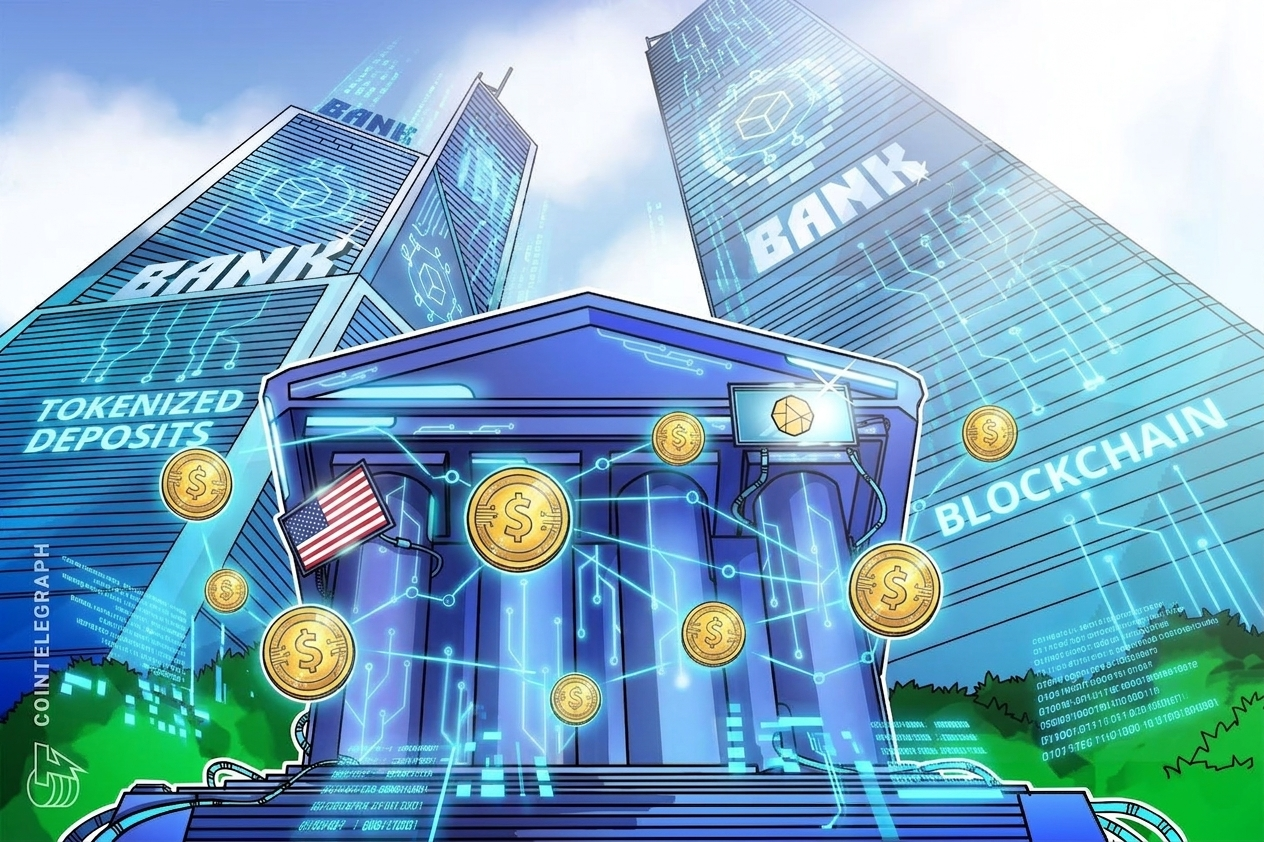
    Tokenized deposits could make bank funding less stable and raise credit costs for US households and businesses, according to an analysis by two economists at the Federal Reserve Bank of Dallas. 

    Economists Rosie Levy and Srini Ramaswamy said instant settlement could allow depositors seeking higher yields to switch banks more quickly. They said programmable deposit tokens and agentic artificial intelligence could automate the transfers, shortening the time that deposits remain at individual banks and making them more sensitive to interest rates.

    The economists estimated that if deposits became 10% more sensitive to interest rates, banks’ capacity to hold long-term loans and other assets could fall by about $700 billion. In a separate scenario, deposits remaining at banks for 10% less time could reduce that capacity by about $580 billion. Both figures are expressed in 10-year equivalents and do not represent direct reductions in lending. 

    The calculations are scenarios rather than forecasts and do not represent dollar-for-dollar reductions in bank lending. They come as US banks build shared blockchain networks designed to move tokenized deposits around the clock while keeping customer funds within the regulated banking system.

    aistudios

    Banks develop networks for tokenized deposits

    On Tuesday, 39 US state banking associations formed the BankChain Alliance to develop a nationwide network supporting tokenized deposits, stablecoins and automated settlement. The Clearing House is developing a separate network backed by JPMorgan Chase, Bank of America, Citi, BNY and Wells Fargo. 

    Banks have also begun connecting tokenized-deposit systems across institutions. On Aug. 20, Standard Chartered and HSBC completed a live cross-border transaction through Swift’s blockchain ledger, which linked the banks’ separate systems and recorded their resulting obligations before settlement through existing payment infrastructure.

    Related: US regulator mulls guidance for tokenized deposit insurance, stablecoins

    Levy and Ramaswamy said banks could respond to more volatile deposits by holding larger portfolios of highly liquid assets, including reserves and US Treasurys. They said banks could also rely more heavily on term debt to maintain their lending portfolios, although funding loans through wholesale debt would likely increase credit costs for consumers and businesses. 

    The authors cited Brazil’s Pix instant-payment system as a potential comparison, while noting that it is not identical to tokenized deposits. A 2025 study found that heavier Pix use increased banks’ holdings of liquid assets and reduced credit intermediation.

    Magazine: SEC’s proposed crypto rules probably won’t spark new ICO boom

    Cointelegraph is committed to independent, transparent journalism. This news article is produced in accordance with Cointelegraph’s Editorial Policy and aims to provide accurate and timely information. Readers are encouraged to verify information independently.


    Source link

    aistudios
    Share. Facebook Twitter Pinterest LinkedIn Tumblr Email

    Related Posts

    PLTR Price Prediction: Pressed Against the Ceiling at $187 — Flush or Final Launchpad Before $200?

    August 31, 2026

    BNB Chain Pasteur Hard Fork Set For August 25 Mainnet Activation

    August 30, 2026

    Kraken and Galaxy flipped late as Solana approved a major supply cut

    August 29, 2026

    PeaqOS and World ID Bring ZK Proofs to Autonomous Robots

    August 27, 2026

    NVIDIA Dynamo’s Shadow Engine Slashes LLM Recovery to 7 Seconds

    August 26, 2026

    Avalanche Tokenized Asset Value Crosses $3B As RWA Push Grows

    August 25, 2026
    binance
    Latest Posts

    Bitcoin’s New Quantum Defenses, 18.9M SOL Cancelled: Hodler’s Digest

    August 31, 2026

    Circle’s cirBTC has only 40 Bitcoin despite institutional backing

    August 31, 2026

    PLTR Price Prediction: Pressed Against the Ceiling at $187 — Flush or Final Launchpad Before $200?

    August 31, 2026

    Kalshi Traders Predict $2,650 Target This Month

    August 31, 2026

    Bulls Reload for Another Assault on $81K as Bitcoin’s Price Rises

    August 30, 2026
    synthesia
    LEGAL INFORMATION
    • Privacy Policy
    • Terms Of Service
    • Social Media Disclaimer
    • DMCA Compliance
    • Anti-Spam Policy
    Top Insights

    Got $20,000? Here Are the Canadian Stocks I’d Buy

    August 31, 2026

    OpenClaw Releases OpenClaw 2.0: Guided Model Setup, 575 ms Control UI Startup, and One Trust Boundary Per Gateway

    August 31, 2026
    Customgpt
    Facebook X (Twitter) Instagram Pinterest
    © 2026 TechoraNewsHub.com - All rights reserved.

    Type above and press Enter to search. Press Esc to cancel.

    bitcoin
    Bitcoin (BTC) $ 78,511.00
    ethereum
    Ethereum (ETH) $ 2,452.26
    tether
    Tether (USDT) $ 0.999668
    bnb
    BNB (BNB) $ 687.59
    xrp
    XRP (XRP) $ 1.38
    usd-coin
    USDC (USDC) $ 0.99986
    solana
    Solana (SOL) $ 103.91
    tron
    TRON (TRX) $ 0.334843
    hyperliquid
    Hyperliquid (HYPE) $ 81.83
    staked-ether
    Lido Staked Ether (STETH) $ 2,265.05