
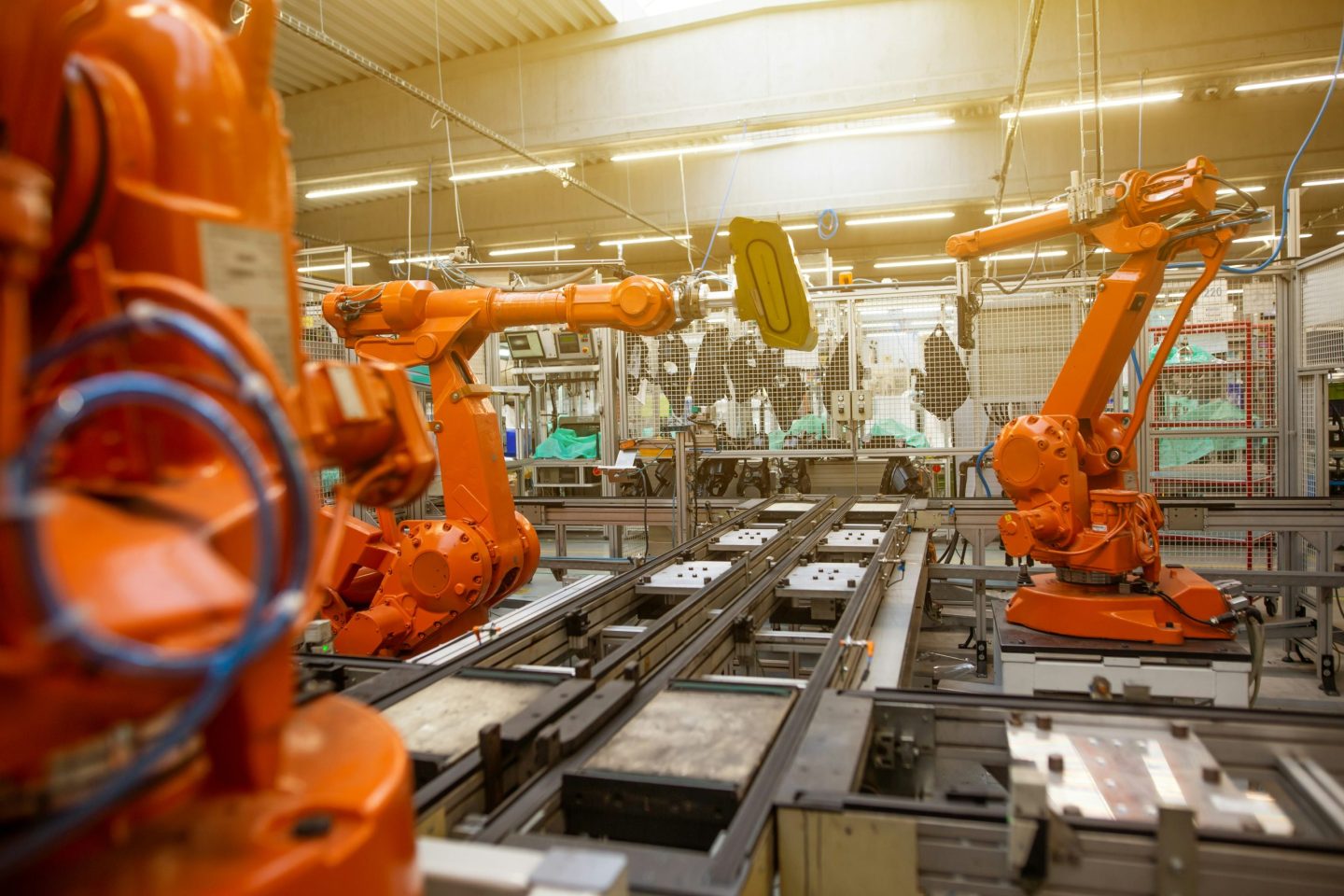

RPA (robotic process automation) is a practical and proven way to reduce manual work in business processes without AI systems. By using software bots to follow fixed rules, companies can automate repetitive tasks like data entry and invoice processing, and to a certain extent, report generation. Adoption grew quickly in many sectors, especially in finance, operations, and customer support.
In recent years the technology has matured. While RPA is still used, business processes can become more complex. Many systems handle unstructured data, like messages and documents. Rule-based automation struggles to handle these inputs, since it depends on predefined steps and structured formats. RPA works best in stable environments where processes do not change often. When conditions change or inputs vary, bots can fail or need updating, adding maintenance overhead and reducing the value of automation over time.
Gartner has pointed to more adaptive automation systems on the market, designed to handle variation and uncertainty, combining automation with machine learning or language models, allowing them to process a broader set of inputs.
From RPA rules to AI-driven automation
AI has changed how companies think about automation, as systems from vendors already known in the RPA space, like Appian and Blue Prism, can now interpret context and adjust their activities, especially relevant for tasks that involve text or images.

Large language models’ ability to summarise documents and extract important details, and respond to queries in natural language offers automation in areas previously difficult to manage. McKinsey & Company research suggests generative AI could automate decision-making and communication work tasks, not routine data handling.
The change does not replace automation, but rather modifies it. Rather than building chains of rules, businesses could use AI to handle variations in input media. Automation becomes more flexible, with systems able to adjust to different inputs without reconfiguration.
That’s the theory. AI systems produce inconsistent outputs, and their behaviour is not predictable. Firms can combine AI with existing automation tools, using each where it fits best. Getting the balance right – intelligent automation – is a hot topic at industry events and on the pages of the RPA and AI media outlets.
Where RPA still fits with AI
Despite these changes, RPA remains relevant in many settings. Tasks that involve structured data and stable workflows still benefit from rule-based automation. Common examples include payroll processing and compliance checks, as well as system integrations.
In these circumstances, RPA’s predictability can be an advantage. Bots follow defined steps and produce consistent results, which is useful in regulated environments. Financial reporting and auditing processes, for example, frequently require strict control and traceability.
Rather than being replaced, RPA is often used with AI. Automation workflows may begin with AI systems that interpret input, then pass structured data to RPA bots for execution. The combination allows companies to extend automation without discarding existing systems.
Blue Prism and the change toward intelligent automation
Vendors that built their business around RPA are adapting to this change. Blue Prism, now part of SS&C Technologies, has expanded its focus to include what it describes as intelligent automation. This approach combines RPA with AI tools capable of processing more complex inputs.
Platforms combine automation with abilities like document processing and decision support, frequently through integrations with AI tools.
The move toward AI-enabled automation also changes how platforms get used. Workflows bring together data sources and decision points, along with execution steps in a single process.
A gradual transition, not a full replacement
Many organisations continue to rely on existing RPA systems, especially where processes are stable and well understood. Replacing these systems would take time and money, which may not always be justified.
Instead, the transformation is gradual. Companies can add AI abilities to extend what automation can handle, while RPA is still in place for tasks where it still works well. This may change how automation is designed and deployed over time, but rule-based systems will remain necessary.
See also: AI agents enter banking roles at Bank of America
Want to experience the full spectrum of enterprise technology innovation? Join TechEx in Amsterdam, California, and London. Covering AI, Big Data, Cyber Security, IoT, Digital Transformation, Intelligent Automation, Edge Computing, and Data Centres, TechEx brings together global leaders to share real-world use cases and in-depth insights. Click here for more information.
AI News is powered by TechForge Media. Explore other upcoming enterprise technology events and webinars here.