

Anthropic’s IPO filing marks the maturation of generative AI from a research-heavy venture phase into a stabilised enterprise utility.
Model developers operating in private markets have prioritised rapid iteration and maximum compute performance over predictable billing cycles. Taking a foundational provider public aligns those engineering goals with standard corporate procurement, introducing structured release schedules and established pricing frameworks that decision-makers require for multi-year planning.
William Samengo-Turner, Technology Sector Lead at A&O Shearman, said: “If Anthropic pursues an IPO, the most important question isn’t whether public markets are ready for AI—it’s whether AI is ready for public markets.”
The enterprise consumer sits directly at the centre of this maturation. Companies integrating Claude into their proprietary workflows can now plan around how public market structures will formalise Anthropic’s pricing tiers, API rate limits, and enterprise service agreements over the coming years.

Establishing a public valuation framework
Institutions looking to capitalise on generative machine learning have largely invested in hardware providers and infrastructure layers. This indirect approach allowed companies to build out the necessary compute clusters without taking on the concerns around model hallucination or algorithmic copyright disputes.
Samengo-Turner notes that public investors have focused on the surrounding ecosystem: “Investors have been able to buy the ‘picks and shovels’ of the AI boom—with infrastructure, semiconductor, and software businesses benefiting from it. Anthropic would offer one of the first opportunities to invest directly in a company building frontier models at scale.”
Pricing that asset class presents immense difficulty. Anthropic and its competitors require continuous, massive capital expenditures to train successive model generations. Converting these capital requirements into a public structure introduces high operational drag for both the provider and the client.
A public Anthropic will need to balance the need to buy tens of thousands of GPUs against the need to post favourable quarterly earnings, which requires passing those compute costs onto the end user in a predictable manner.
Karthik Hariharan, Senior Engineering Manager at DoorDash, commented: “Both OpenAI and Anthropic are racing to IPO ahead of each other and catch up to SpaceX/xAI. The problem is whoever lands first probably sets the floor and ceiling for public market pricing that others will follow for at least 12–18 months.”
If Wall Street demands aggressive margin expansion following the IPO, enterprises should anticipate tighter licensing terms and the potential deprecation of older and less profitable model versions. This creates forced migration cycles for corporate development teams, requiring them to constantly update their API integrations to maintain access to the most cost-effective models.
The B2B dependency
The commercial structure of these public listings relies heavily on enterprise adoption because the consumer market lacks the scale to offset computing costs.
Suvrankar Datta, Principal Investigator at CRASH Lab, explained: “There are eight billion human beings on the planet… of the eight billion, only 100 million can afford to pay for Claude at the current rate. Even if they pay $20 per month for Claude, it still won’t be able to survive without an IPO.”
The $20 monthly consumer tier cannot fund billion-dollar server clusters. Therefore, model providers must extract their required revenue from corporate budgets, integrating their tools into daily enterprise operations such as human resources, legal document review, and customer support triage.
Nate Elliott, AI Analyst at Emarketer, said: “We’re about to find out whether the market thinks AI is a consumer story or an enterprise story. Because while Claude has built a solid enterprise user base, it’s just not competitive as a consumer AI platform.”
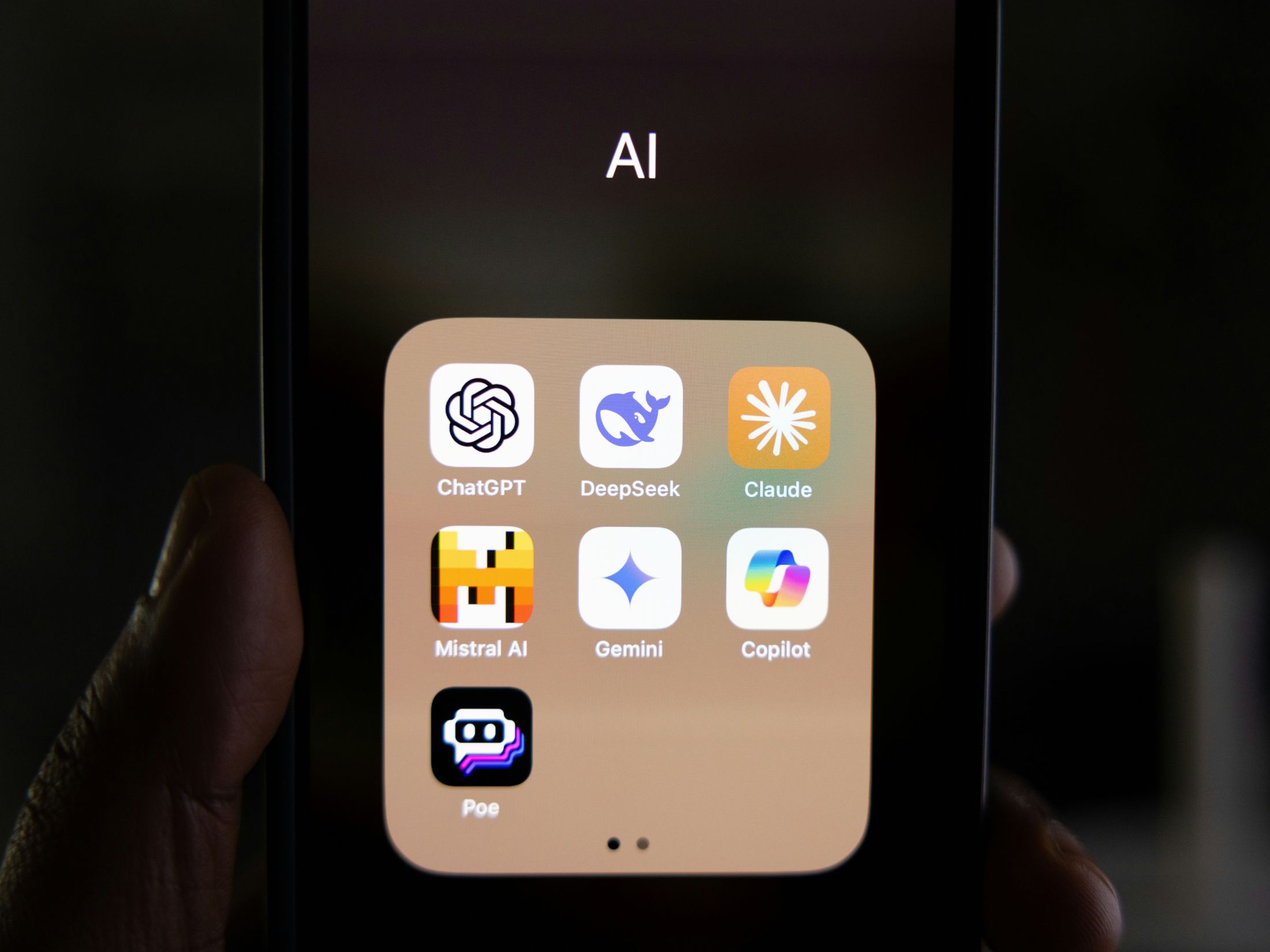
Emarketer forecasts that only 5.4 percent of US internet users will use Claude in 2026, far behind the 36.6 percent who will use ChatGPT and the 27.4 percent who will use Gemini.
“The good news for Anthropic: more than 60 percent of US AI users say they use these tools for work, and we believe that percentage will only grow,” adds Elliott.
Anthropic will need reliable, high-volume enterprise contracts to demonstrate steady revenue growth to prospective shareholders. Boardrooms can use this dependency to negotiate longer-term price locks and favourable data governance agreements before the public market forces Anthropic to prioritise short-term yield over market penetration.
Margin pressures and market consolidation
The impending public offering acts as a forcing function for commercial discipline across the entire generative computing sector. Rather than viewing this negatively, enterprises can see it as the end of unpredictable startup behaviour and the beginning of reliable vendor management.
Smitarani Tripathy, Social Media Analyst at GlobalData, said: “Discussions reveal increasing concerns around the economics of the AI ecosystem, with several influencers questioning whether massive investments in model development and compute infrastructure can ultimately translate into sustainable profits.”
Tripathy further explains that this filing initiates an “AI capital markets race,” where model providers must demonstrate revenue growth, operational efficiency, and defensible business models alongside innovation.
If a vendor goes public and fails to achieve sustainable profits, they may aggressively alter their service-level agreements or sunset key API endpoints to reduce overhead.
“Future valuations will hinge on enterprise unit economics, gross margins, and customer retention, forcing severe consolidation among smaller players unable to scale commercial revenue engines or achieve software-like operating leverage,” explains Tripathy.
Companies building proprietary tools around smaller language models must prepare for those providers to be absorbed by larger entities or forced out of the market entirely. Designing middleware layers that allow smooth swapping of foundational models is a vital defensive measure against vendor bankruptcy or acquisition.
In addition, enterprises should expect more aggressive rate limiting. In a private model, absorbing the compute cost of heavy user requests serves as a loss leader to build market dominance. In a public model, unmetered access destroys gross margins. Businesses will likely see the introduction of complex, tiered pricing structures that penalise erratic workloads and reward predictable, batch-processed data requests.
The test for high-capital innovation
Anthropic’s journey to the public exchange serves as a barometer for how institutional capital values resource-intensive technology.
Samengo-Turner expands on the wider implications for venture-backed companies: “The significance extends well beyond the AI sector. A successful listing could become a reference point for how public markets assess a new generation of technology companies that combine immense capital needs, world-class research talent, and long-term strategic ambitions.”
He notes that this event could “encourage more venture-backed technology companies to revisit public markets after a decade in which many of the sector’s biggest growth stories remained private.”
If Anthropic successfully sets a public valuation framework, a wave of machine learning companies will likely follow, moving the entire vendor ecosystem toward strict financial compliance and margin protection.
“Ultimately, investors will be evaluating more than Anthropic’s prospects,” Samengo-Turner concludes. “They will be testing whether public markets are prepared to support the next generation of technology champions.”
See also: Anthropic releases Claude Opus 4.8
Want to learn more about AI and big data from industry leaders? Check out AI & Big Data Expo taking place in Amsterdam, California, and London. The comprehensive event is part of TechEx and is co-located with other leading technology events including the Cyber Security & Cloud Expo. Click here for more information.
AI News is powered by TechForge Media. Explore other upcoming enterprise technology events and webinars here.